Jonathan Edwards Trust Annual Newsletter 2025
December 2025
Dear Jonathan Edwards Alumni, Fellows, and Friends,
I am excited to share with you our 2025 newsletter from the JE Trust. The Trust strives to enhance the experience of our JE community—the students, fellows, and alumni, as well as the friends of JE we have made over our many decades. You’ll read in this newsletter about some of our treasured traditions, the vibrant current life in the college, our history, and the present-day work of featured alumni.
I also write to share some JE-related updates. In early 2025, Mark Saltzman resumed his position as JE’s Head of College. In May, I became the Chair of the Trust. It has been an honor to follow Eve Rice JE ’73, who held the position before me. When I first arrived at JE in 1989, we celebrated the 20th anniversary of women at Yale. Thanks to JE and Yale’s preparations for the 50th anniversary of Women at Yale in 2019, I got to work with Eve and the extraordinary JE women of ’71, ’72, and ’73 who together transferred in and entered Yale in the fall of 1969. I have learned so much from them and from Eve herself, who will graciously continue as Immediate Past Chair. We are grateful for the wisdom, care, and energy she brings to everything she does for our JE.
Thank you to the team of JE’s own Lydia Burleson JE ’21, Masu Haque Khan JE ’95, Barney Latimer JE ’93, and Penny Laurans, who worked to make this year’s newsletter such a compelling read. Please let us know what you think of this newsletter and what you hope to see in the Trust’s future. Perhaps another chance for us all to gather in person soon?
Yours in JE,

Miko McGinty JE ’93
Chair, the Jonathan Edwards Trust
Note from the JE HOC: Fall 2025
Dear JE Alums,
It is midterm time at Yale. The days are warm, the leaves are still on the trees, the atmosphere is electric. Yes, it has been unseasonably warm through September and now October, but pleasantly so. Still, while I am walking across campus in short sleeves, I see some students wearing winter coats. We are a diverse community, in so many ways.
I am pleased to report that all things JE in the fall semester of 2025 are thriving! We kicked off the academic year in the usual way—with a first-year dinner and a senior toast and a celebration of Jonathan Edwards’s birthday—and students have gotten down to the business of the year.
One weekend in early October, a particularly lovely one with crystal blue skies and warm breezes, parents and siblings joined us for Family Weekend, which was delightful. We had a lively panel discussion and reception in the Lower Taft Library, which spilled out into the adjacent Yale University Art Gallery sculpture garden. But what I most enjoyed were my incidental meetings in the JE dining hall, with smiling students proudly introducing their families to a favorite space.
The JE Fellowship is lively and engaged. We have more advisors for first-year students than we need (shush on that point), and they are all so attentive to their advisees. I am delighted to see them in the dining hall, in the courtyard, on the JE house patio, at the tables on Library Walk, talking to each other. The young and the experienced. As I advance in age, I am finally starting to identify more with the advisors than with the students, which is a shock. I still feel I have so much to learn, and I think that I depend on advice from my wise friends and JE Fellows as much as the first-years do.
We welcomed a new resident fellow to JE this year, Professor Chiara M. F. Mingarelli. Chiara is an assistant professor of physics, and she brings her passion for studying supermassive black hole binaries together with her joy in supporting students and celebrating friendships. In October, she brought Nobel laureate and fellow physicist Kip Thorn to JE for a luncheon with students in our Senior Common Room.
We are preparing for three JE teas and a Tetelman Lecture this semester. Our Tetelman Lecturer is Daniela Rus from MIT, director of the Computer Science and Artificial Intelligence Laboratory there. I anticipate a fabulous event and a thought-provoking lecture on a topic that is on all of our minds.
I wish you all well from New Haven, and I hope that you will come to visit us if you are in the area. As I have returned to life in JE, I am reminded daily of the strong sense of community and support that I experience here. I have attached a playlist that aspires to recreate that sense of friendship and support and community.
With best wishes,

Mark Saltzman
Jonathan Edwards Head of College
Head Saltzman’s 2025 Newsletter Playlist (a tradition in Head Saltzman’s emails to current JE students and fellows and now shared with JE alumni!)
- “Crowded Table,” the Highwaywomen
- “Happy Together,” the Turtles
- “Lean on Me,” Bill Withers
- “Don’t You Worry ’Bout a Thing,” Stevie Wonder
- “Get Together,” the Youngbloods
- “Stand by Me,” Ben E. King
- “Everyday People,” Sly & the Family Stone
- “(What a) Wonderful World,” Sam Cooke
- “The Village Green Preservation Society,” the Kinks
- “Good Vibrations,” the Beach Boys
- “Top of the World,” the Carpenters
- “All You Need Is Love,” the Beatles
Find the playlist on Spotify here!
Note from Current JE Students: JECC
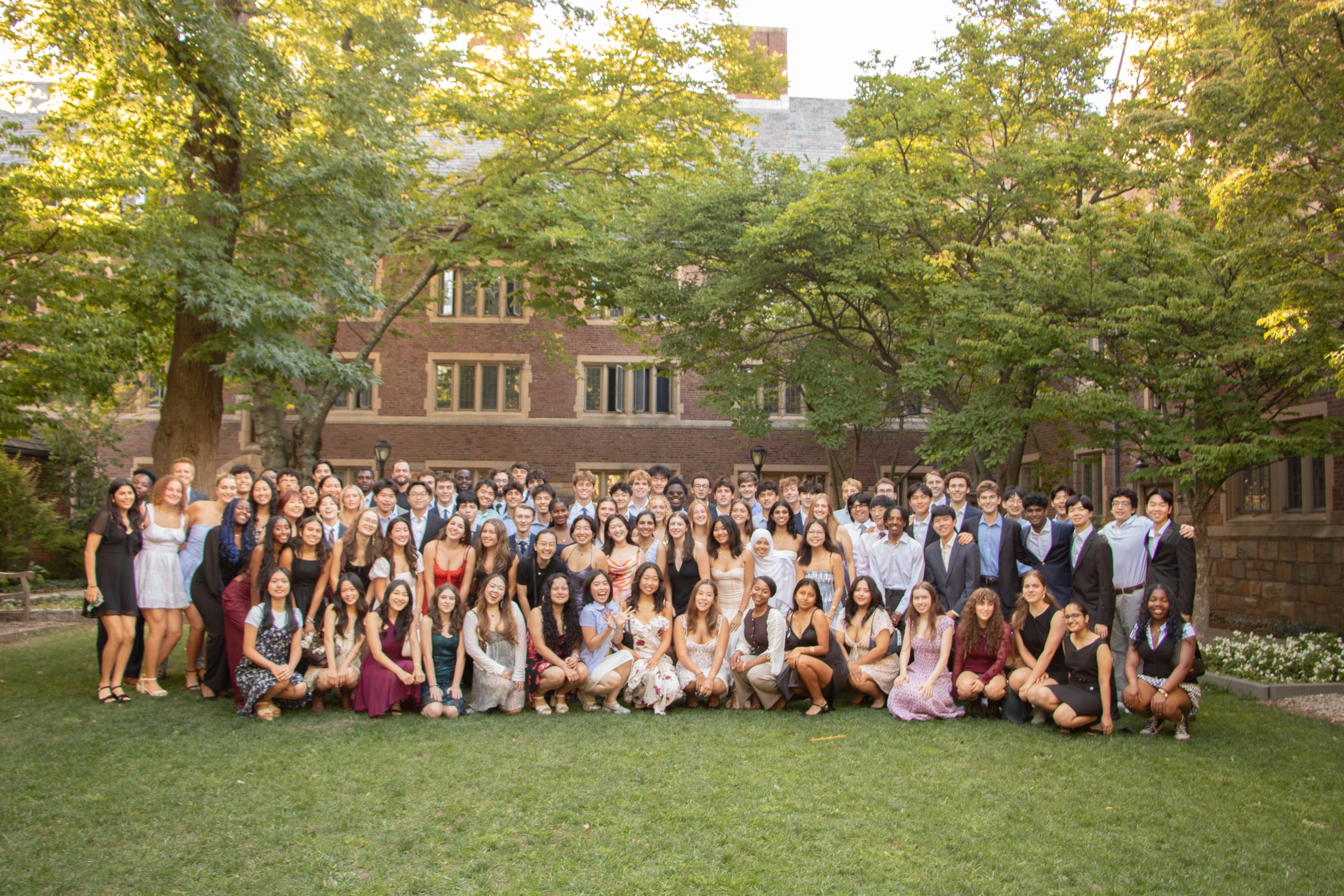
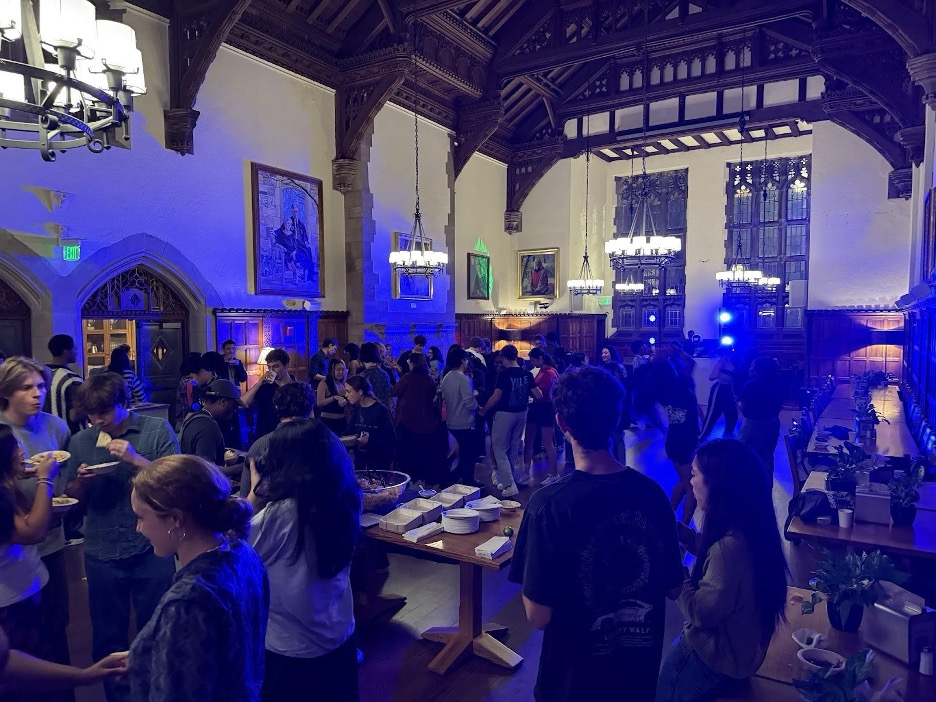
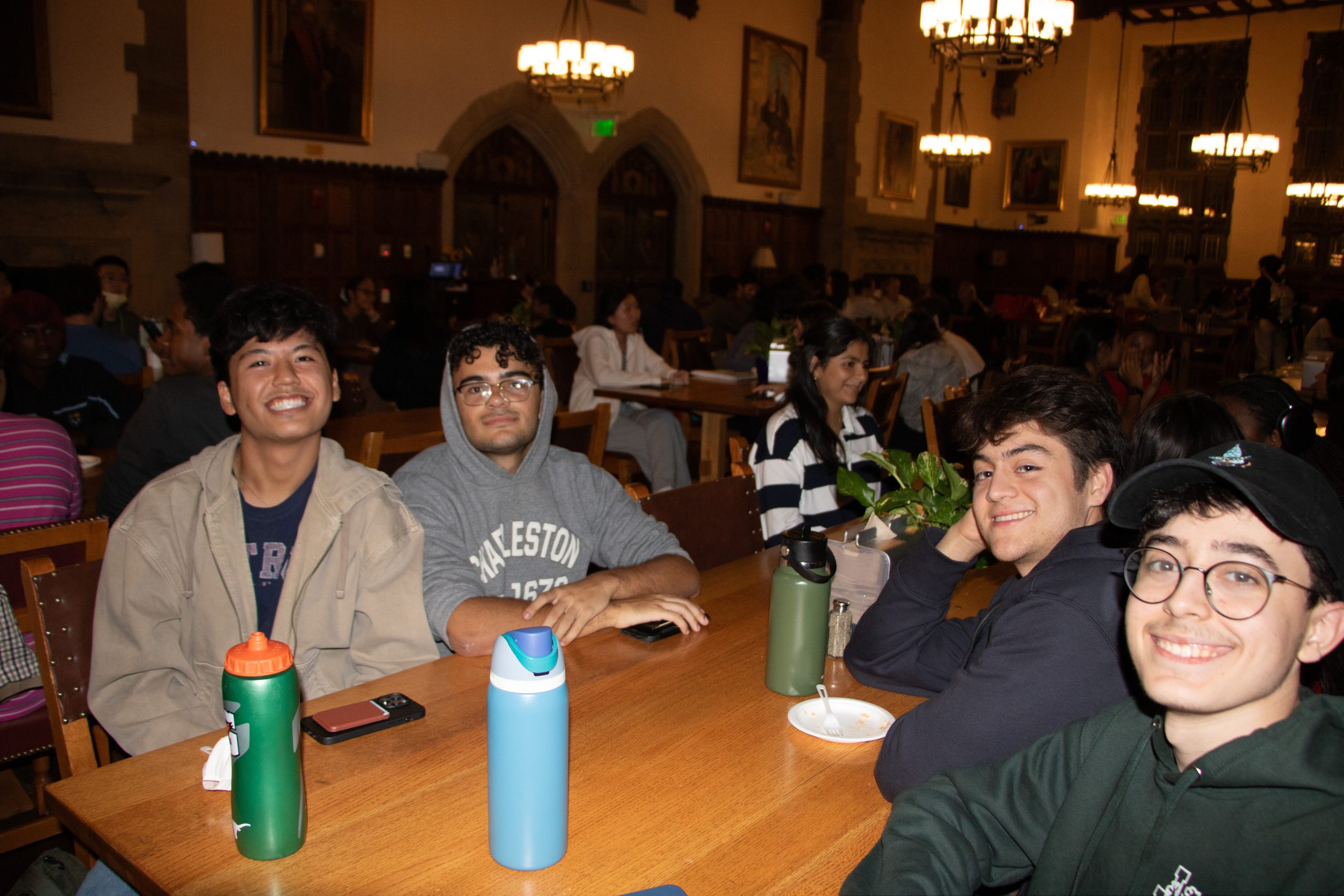
Dear Alumni, Family, and Friends of the Jonathan Edwards community,
As the fall semester began with a burst of energy and anticipation, JE’s staff and students—including members of the JE College Council (JECC)—sprang to life. Made up of undergraduates from every academic year and an amazing range of backgrounds, the JECC is united by a passionate commitment to strengthening the College through special events and rewarding forms of community engagement.
Here are some of the things we have done so far as a council:
- This September, we welcomed the first-years to campus! Each year we hold elections for new first-year JECC representatives. This year, we have eight new JECC members from the Class of 2029, along with 20 new sophomore, junior, and senior members.
- On September 24th, we worked with Dean Robles to host a Salsa & Salsa night in honor of Hispanic Heritage Month. A DJ played reggaeton and salsa music, tables were spread with delicious chips and sauces, the undergraduate Latin dance group Sabrosura gave dance instructions, and every JE spider got a chance to take a festive and much-needed study break.
- On October 8th, the JE Sibs event was hosted in the dining hall. This program, a collaboration between JECC and the FroCos (first-year counselors), matches every first-year student with a sophomore, junior, or senior volunteer who helps them acclimate to their new lives as Yale undergraduates.
- On October 12th, JE celebrated the arrival of autumn with their annual apple-picking trip. Students bundled into buses that took them to Bishop’s Orchards in Guilford, where they picked apples straight from the trees and bought apple-related sweets from the nearby store.
Having helped get Fall 2025 off to such a great start, the JECC will continue to bring spiders together through the rest of the year by keeping cherished holiday traditions alive, like carving pumpkins and writing gratitude cards for the staff. In addition to organizing these events, the JECC frequently hosts study breaks and other get-togethers. And, most importantly, the JECC is supported by an irreplaceable community of students and faculty that share an undying commitment to building community at the College level.
With JE spirit,

Jackson Castañeda, JE ‘27, JECC President
A Conversation between Broadway Actor Eric Sirakian JE ’15 and Former JE HOC Penny Laurans


Transcribed by Lydia Burleson JE ’21
Recently, former Head of College Penny Laurans interviewed alum Eric Sirakian JE ’15 about his time in theater at Yale and his acting career since graduating. Eric is perhaps best known for his lead role in the Broadway play The Kite Runner and for playing Max Ritvo JE ’13 in a London production of Letters from Max. Penny and Eric discuss these topics and more below.
Penny (hereafter PL): Thanks so much for joining me, Eric. I want to go back in time to 2012 and start with your first year at Yale and in JE, when one day, I was sitting comfortably in my Head of College office, and a new freshman named Eric Sirakian came into my office and told me about a great plan he had. What was that plan?
Eric (hereafter ES): I think you’re referring to the sonnet marathon.

The original advertisement for the sonnet marathon event. Source.
PL: I am.
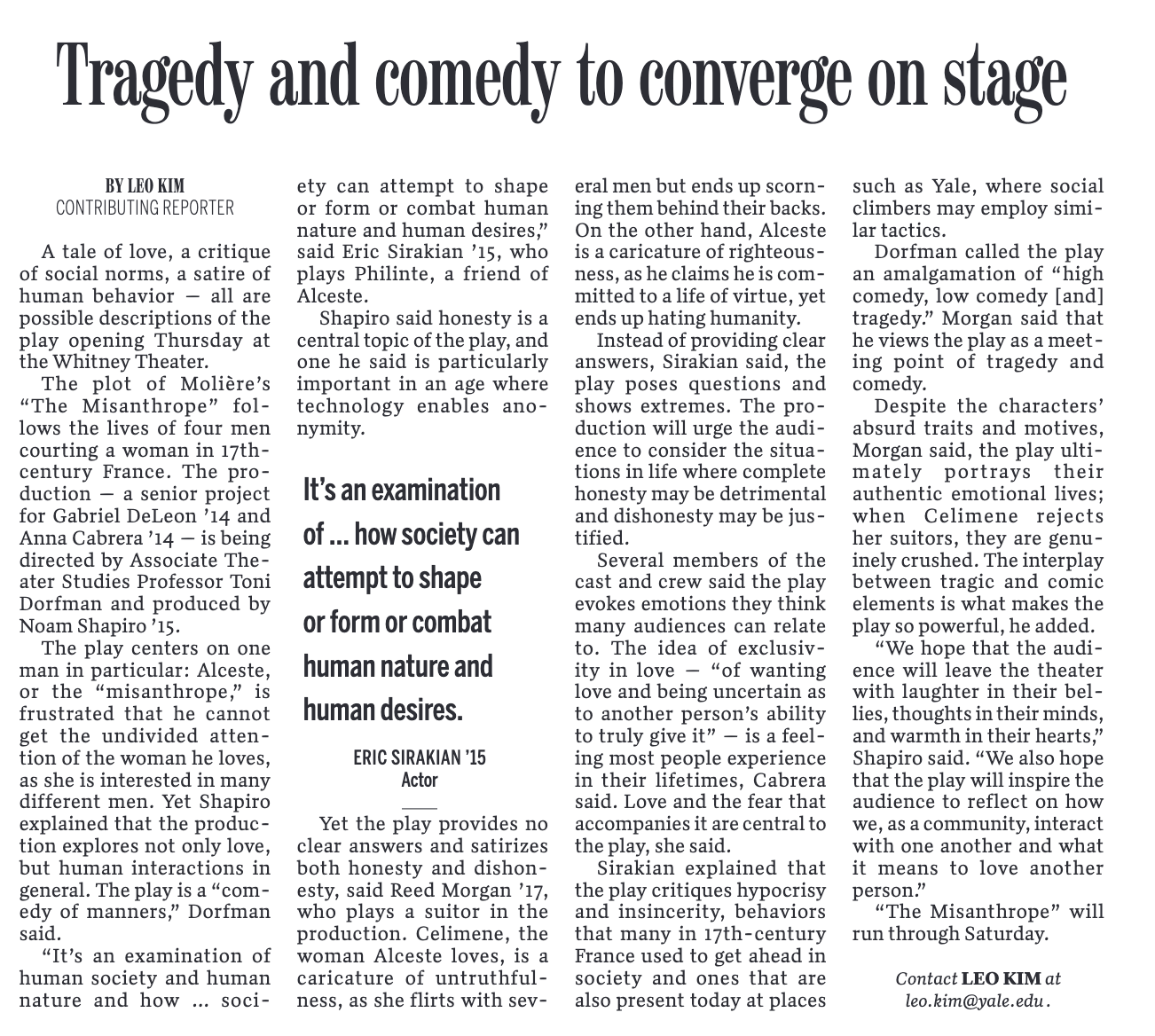
ES: So there was a Shakespeare-at-Yale term, which was a semester-long celebration of Shakespeare. I can’t remember where I got the idea, but it occurred to me that it would be a great celebration of Shakespeare and of Yale if the Yale community hosted a marathon reading of all 154 of Shakespeare’s sonnets. I think what excited me most as a first-year undergraduate at this giant university, with so many different schools and departments, was the idea of bringing together 154 people from completely different corners of the university to participate in a single event. The idea was to have each participant read one of Shakespeare’s sonnets, one after another, in order. I tried to make sure that every school and department was represented.

Graphic from the Yale Alumni Magazine article about the event. Source.
PL: Yes, so you came into my office and said you had this idea, to have the 154 Shakespeare sonnets read by various members of the community in Sterling library. You wanted it to be a Valentine’s Day event, and you wanted to have food. And I said the chances of this are just about nil. First of all, you don’t have food in the library. And I just couldn’t imagine the librarian saying that this was going to be okay. And yet, you brought it off! It was amazing!
ES: One of the amazing things about Yale is that the arts are so important, and student initiatives are so greatly supported that you can break rules. And that’s what makes it feel like a place of such possibility and adventure.
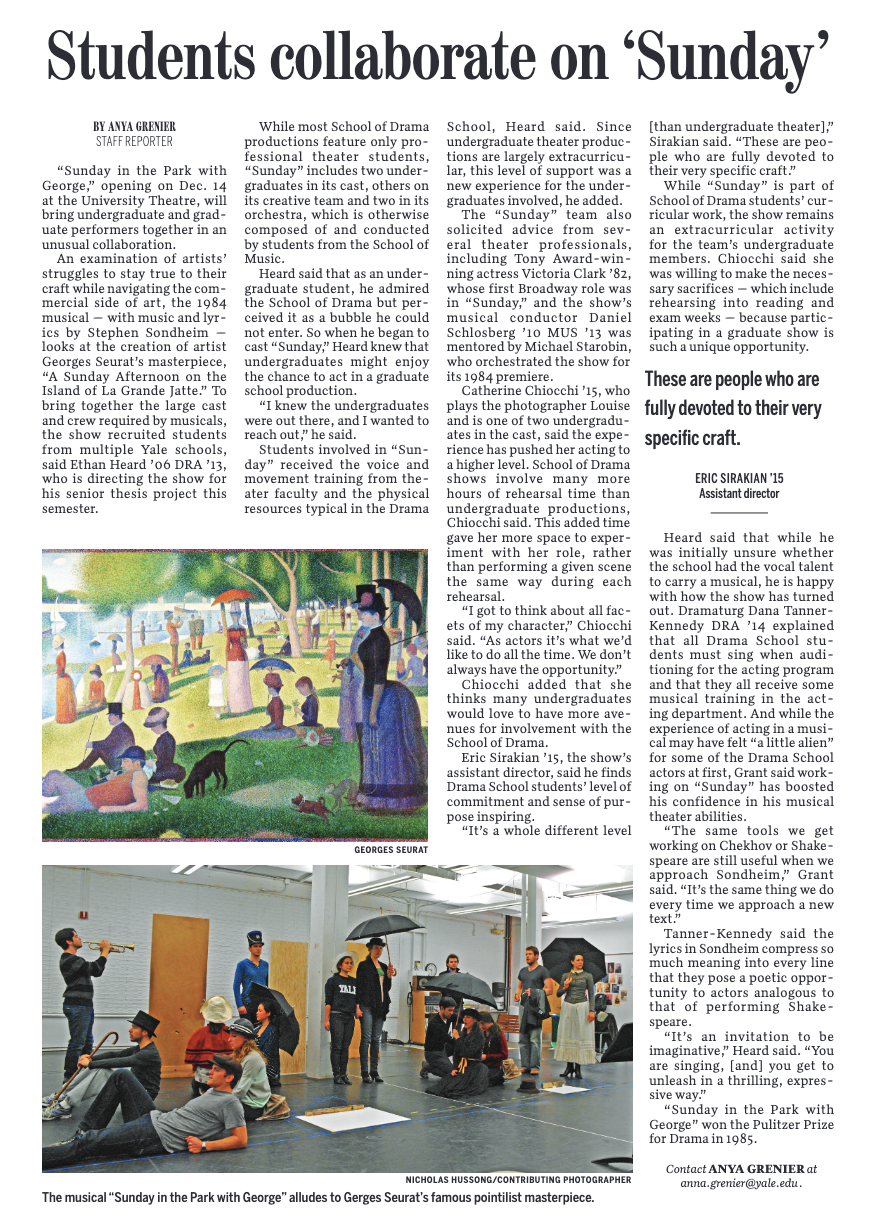
I broke another rule when I directed Anna in the Tropics, which is a play about a cigar factory. We staged it in the Yale Rep as one of the Dramat plays, and up until that point—well, probably still—you weren’t allowed in student productions to smoke on stage or light anything on fire. I think candles weren’t allowed either. But, you know, it’s a play about the making of cigars. There’s a very important moment in the play when a cigar is lit, and all of the main characters take a puff, and the rule was, no, we can’t do it, but I fought really, really hard, and we did it. In the end, I don’t know how that rule was bent or broken.
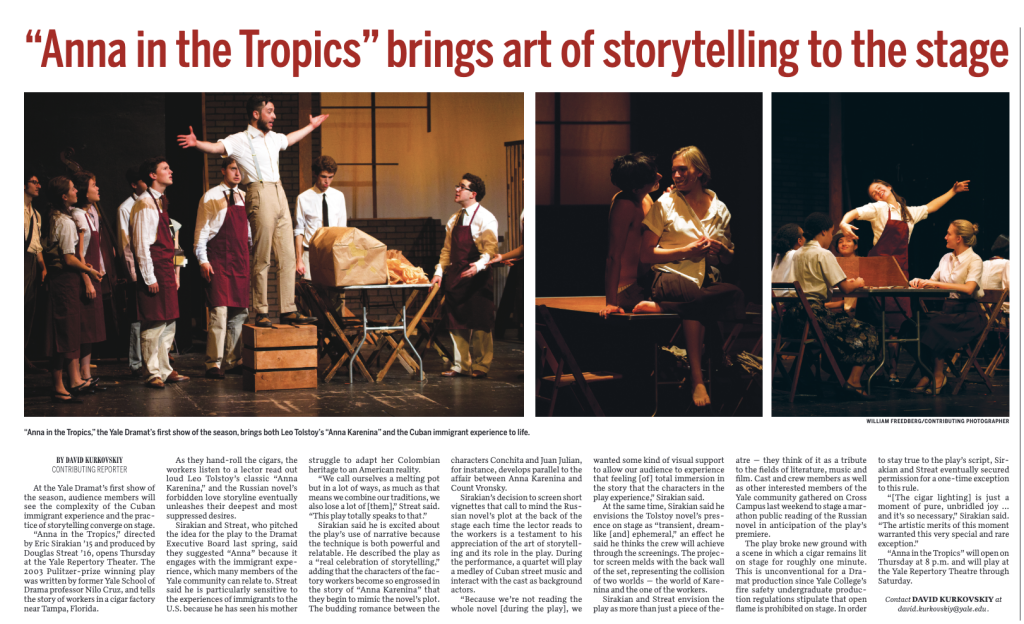
A 2013 feature from The Yale Daily News on Anna in the Tropics.
PL: They didn’t want food in the library, and they didn’t want you to smoke and risk burning down the rep, and you did both things.
So the sonnet marathon was one of your ideas. And then, at another time in your freshman year, you came to me and said that you had this idea to direct A Prayer for Owen Meany, the John Irving novel that became a play and that had never been performed before on stage, is that right?
ES: It had been done only once in London at the National Theater.
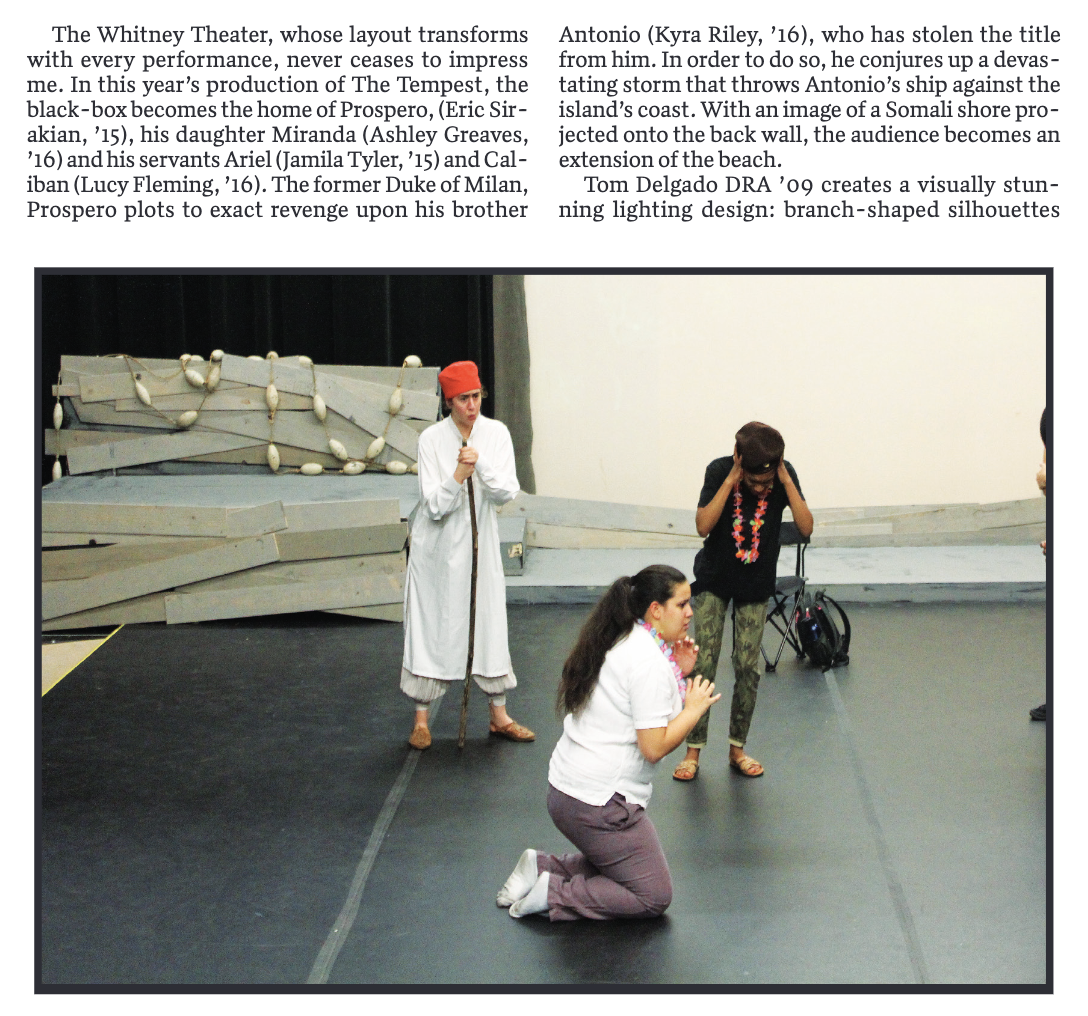
PL: And not only did you want to do this, but you wanted to invite John Irving to come see the production. And I said, very good luck to you, Eric. Go ahead and try. I said, if he comes, we will of course host him in Jonathan Edwards, and we’ll put him up. My sense was that this would never happen. And what happened? John Irving came to see your play.
He came with his wife. And he stayed in the JE guest suite, and I fed them all breakfast in the Head of College’s house the next morning. Nobody could believe we had John Irving, and there he was. And the play had a large cast, as I remember.
ES: Yeah, it’s kind of this big, sweeping novel. Novels generally are tricky to adapt to the stage, and stage adaptations of novels tend to have a lot of people in them, so it was a great choice for the first-year show, which is intended to get lots of people involved in theater.
PL: It was a remarkable production, a remarkable Head of College Tea. And it was super remarkable that the author, the famous author, came when you invited him.

2012 YDN feature on John Irving’s visit to campus.
You broke categories in a very good way, and you eliminated my belief that these things couldn’t happen, which is the best thing that Yale and JE students can do. So, that was the beginning. And then you went on to have a remarkable career at Yale. You won the Sudler Prize, which is awarded at Class Day to a person who has made a tremendous difference in the arts at Yale. And then what? Where were you once commencement was over, what was in your mind?
ES: I didn’t really know what was next for me. I knew that I had a callback in London for the Royal Academy of Dramatic Art. So I graduated not knowing what was next, but I went to that callback in London, and I got a place. I was unsure about going straight back into school after Yale, which was so full-on, and I knew that drama school would be extremely intense as well, but I was so hungry to be an actor, to start my career, and I knew that I needed to lay a foundation that would support the kind of work that I really wanted to do.
PL: How did the Royal Academy turn out?
ES: It was great. It was exactly what I needed. I can’t honestly say that it was fun all the time, but it was hugely inspiring. It was just so challenging. It was so humbling.
PL: What would you say was your first big break after, or during, RADA?
ES: I don’t know that I’ve had a big break yet. There have been things in my career that have resembled big breaks, but I think what I’ve learned is that everything, no matter how big, even after I got to play a lead role on Broadway, everything is really just a step. The concept of big breaks kind of suggests that something happens, and then your future is secure, or your reputation or your identity is set in stone. But it’s more like building a house one brick at a time, and some bricks are very big, and some are small, but the house doesn’t get built with one brick, you know? I was lucky when I graduated. I left RADA two months early, to play a small role in a play in the West End.
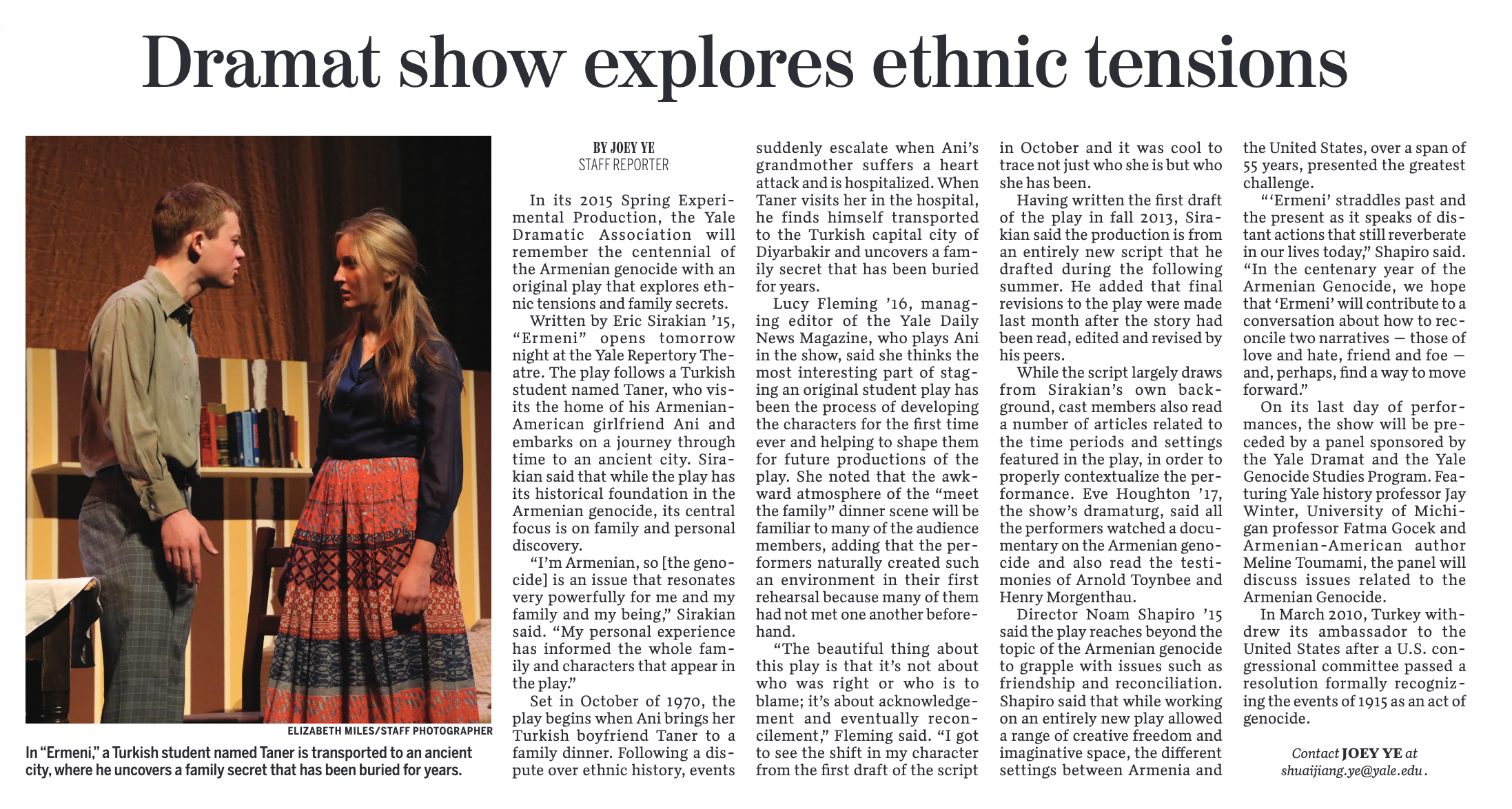
PL: Let’s talk now about The Kite Runner. Because that must have been a critical moment in your career when you played Hassan in The Kite Runner. By the way, a group of proud JE students and I came to see you when you were in New York.
ES: That was very cool. Thank you again for coming.
The play was a story that was very close to my heart, a story about immigrants, which my parents are, and about a part of the world and a culture that I can really, deeply understand and appreciate. To be a part of that kind of story on such a big stage was really special. And I got to play such a wonderful part: he’s kind of the hero of the story.
Unlike a lot of the things that you get cast in early in your career, it was a role that really stretched me. It allowed me to use and experiment with all the wonderful things I had picked up in my training. Often, in the beginning, you’re cast just as people that are very close to who you are. I mean, in this past year alone, I’ve played two Yale students. So, you know, it does happen that you get roles that resonate with you in some way, but in this case, I got to play an 11-year-old as an adult, which required a lot of physical transformation.
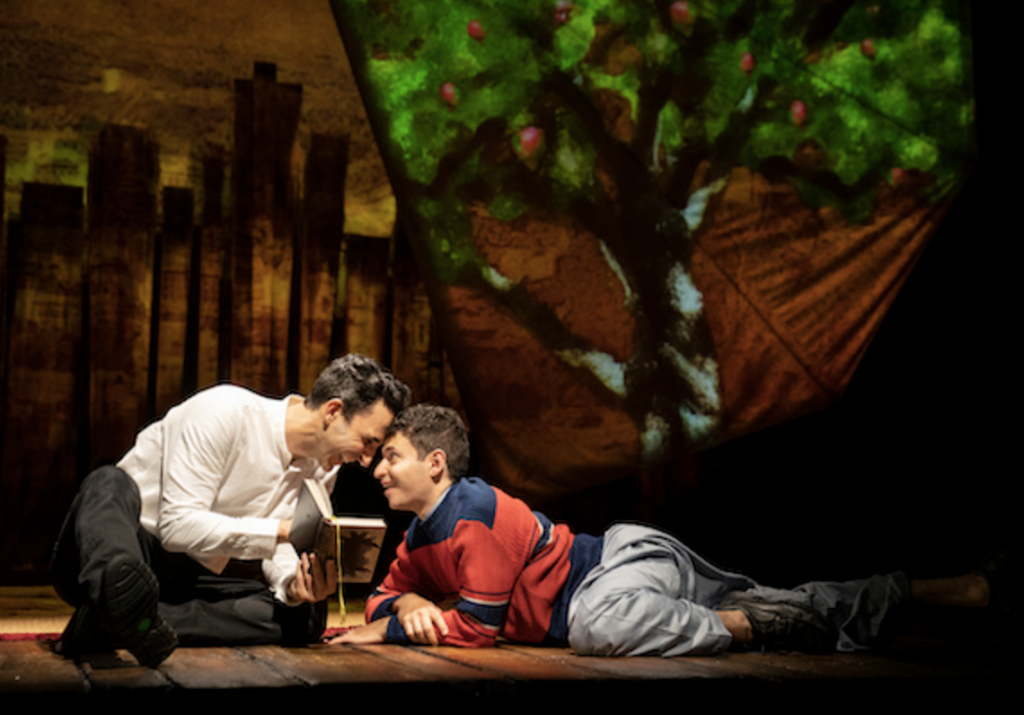
Eric Sirakian (right) in The Kite Runner on Broadway (Joan Marcus photo). Source.
PL: So now, let’s also talk about something that’s very JE-centric and Yale-centric, the play you were in called Letters from Max.
ES: That was another extremely special, extremely close-to-my-heart project. Max was this brilliant undergraduate poet at Yale. He was two years above me, so we overlapped at Yale for two years. He was a centerpiece of life at JE, as I understand it. A huge personality, extremely warm and affectionate, brilliantly and precociously talented, but also very goofy and fun, and kind of large in a way that wasn’t overbearing but gave others permission to be large and to be themselves and to express themselves in unconventional ways.
Sadly, he was sick before Yale, and then his cancer recurred while he was at Yale. But he didn’t like to be defined by that. It was obviously a big part of his life, his fight with this disease, which took his life way too early, at the age of 25, a few years after his Yale graduation. But he, in that short life, managed to produce two books of poetry, a book of letters with Sarah Ruhl, and lots and lots of other publications.
I met Max at JE, I knew who he was. We weren’t friends or anything, but, you know, he was hard to miss, and we had lots of mutual friends as well. But then, I very luckily applied to and ended up in Sarah Ruhl’s playwriting class. This was the first time that she had taught a class for undergraduates, so it was extremely special. One of the people in that room was Max, who I got to know a bit more in that class. Max, who had never written a play before and was a poet—he was a huge presence in the class.
He and Sarah, right in front of our eyes, developed this profound artistic soulmate bond. And then his cancer came back midway through that very term, and he had to go into surgery and treatment. Sarah visited him in the hospital, and this great friendship developed, which was captured in the form of a book of their correspondence, later turned into a play. It’s an epistolary play, a play of letters between two people, although it also includes poetry, and scenes of dialogue from when they met in person. It’s kind of a collage, a beautiful tapestry of a relationship that’s woven in the face of this terrible adversary, cancer.
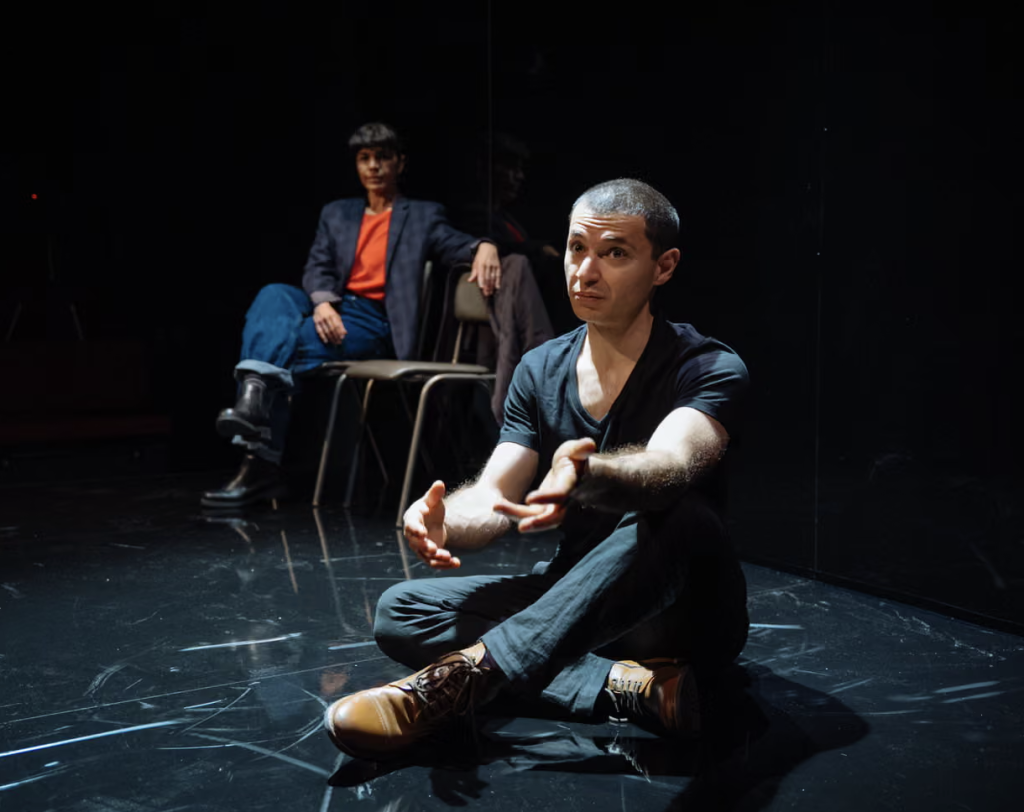
Sirine Saba (Sarah) and Eric Sirakian (Max) in Letters from Max at Hampstead theatre, London. Photograph: Helen Murray. Source.
PL: Since I was the Head of JE, I had these two remarkable students in my college, the dream of every Head of College. Max was involved in everything in JE. He was one of the so-called men of JE, which included women, who did a lot of pranks. He was involved in everything that he had a great passion for. Poetry and everything from day one. You and he were in the same playwriting class together, and then you were able to bring him to life again on the London stage. It doesn’t get any more remarkable than that. It was just incredible. We’re so proud of you, you know?
ES: Well, I didn’t do it alone—the university and my peers and amazing teachers deserve huge credit.
PL: Is your family proud of you?
ES: Yeah, they’re very proud and supportive. I’m very lucky.
PL: Well, we hope that you will keep in touch. Thank you for bringing your artistic gifts and your community spirit to Yale and to JE. You will have a community of spiders watching you closely and cheering you on wherever you are.
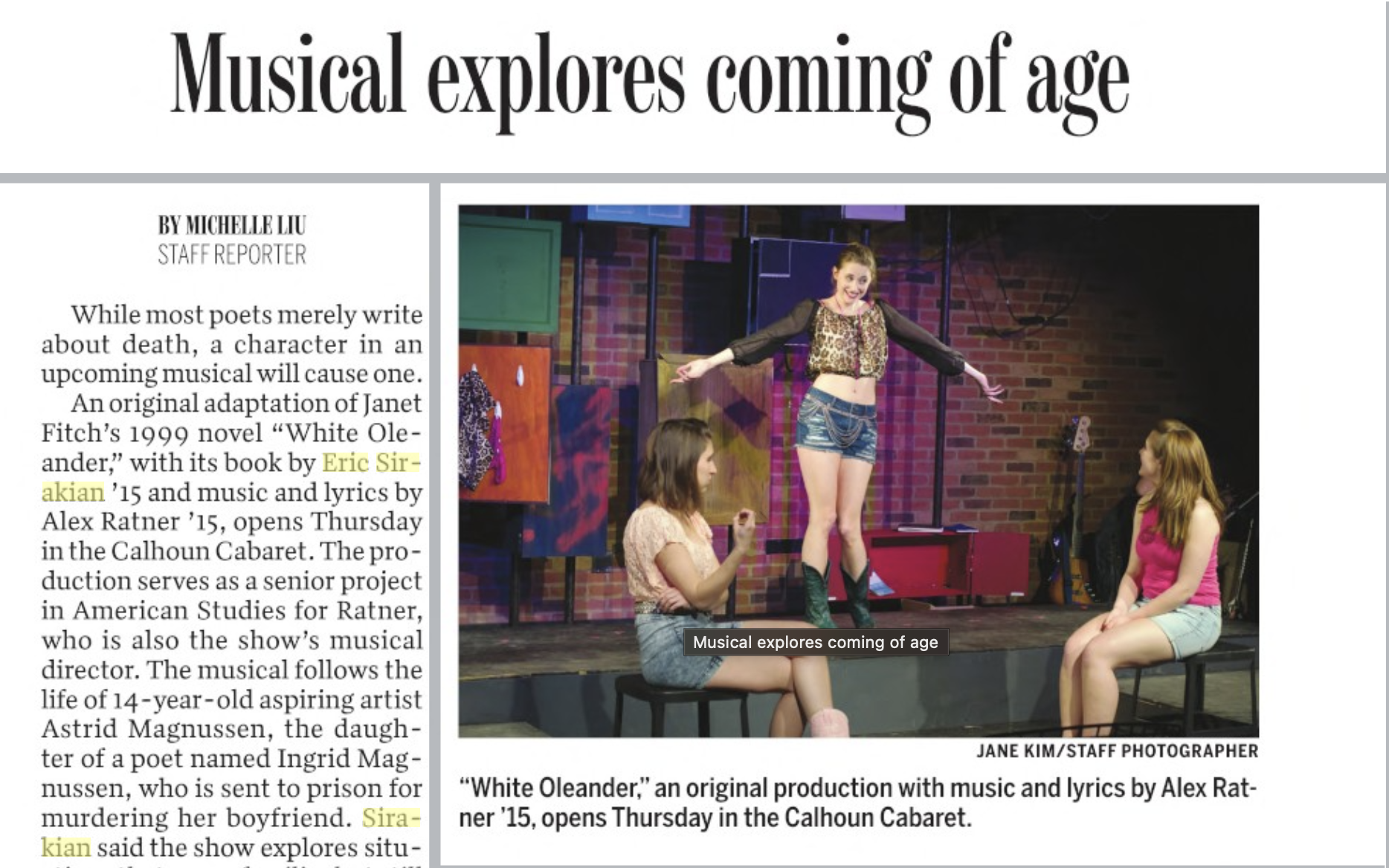
JE in the YDN Archives: 1931–1939
Co-written by Jennifer Julier JE ’77 and Lydia Burleson JE ’21
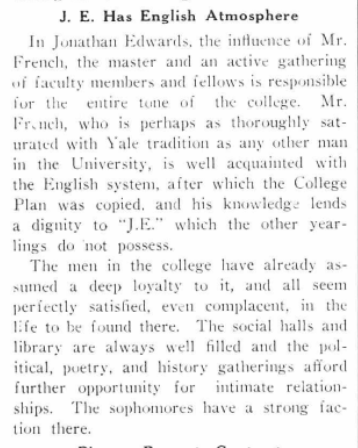
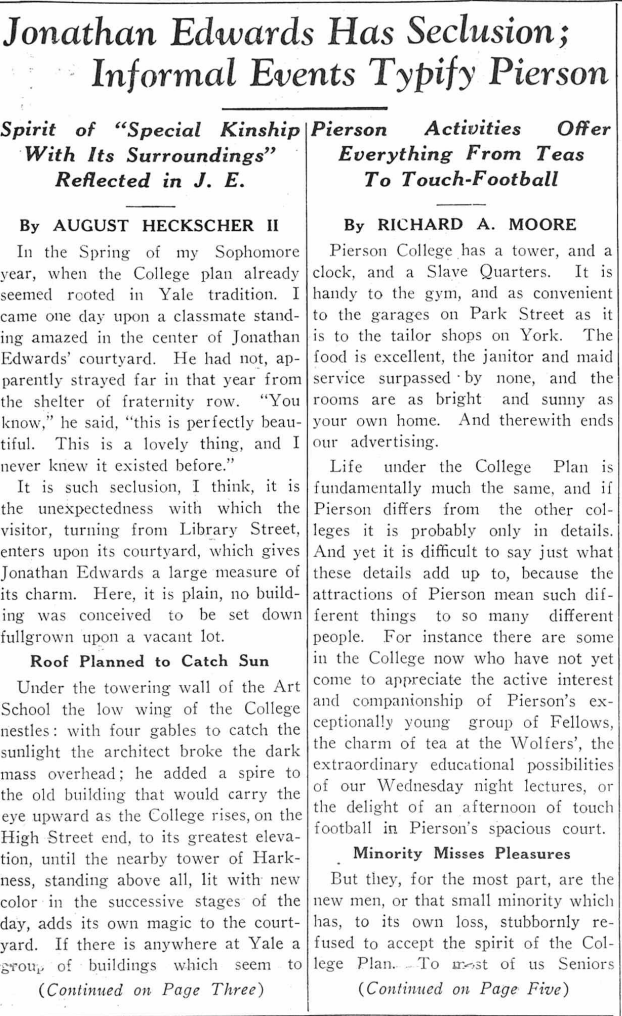
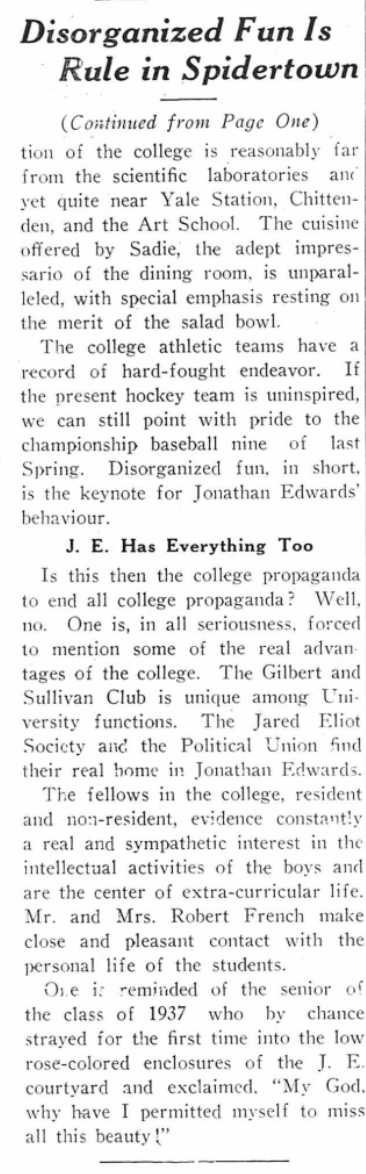
Recently, Jennifer Julier JE ’77 posted in the JE Trust Facebook group about a JE factoid she had found in the Yale Daily News archive. What follows are excerpts from the residential college’s early history that, like the factoid Julier shared, tell in part how JE’s culture emerged at a time when it, like the rest of Yale’s residential colleges in the 1930s, was a nascent dormitory community still laying its roots. A list of resources that allow other JE alums to dive deeper into this history follows the excerpts below.
How JE’s Early Character Was Advertised
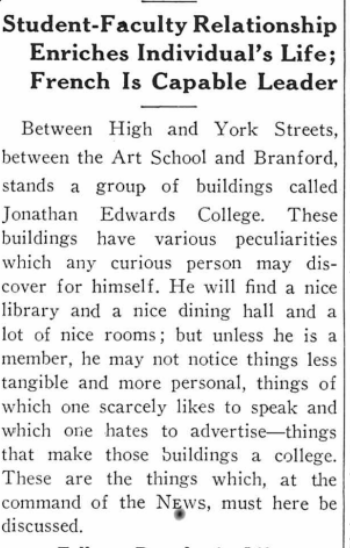
When the residential colleges were first introduced, the YDN ran “advertisements” every February highlighting the different college cultures to help students decide which college to apply to (initially, students were not placed in their residential colleges upon matriculation as they are today). Here are a few of the ads showcasing the perks of “Spidertown” (spoiler, it’s the library, the seclusion, and the “English atmosphere,” things that remain super cool today).

From Puritans to Spiders
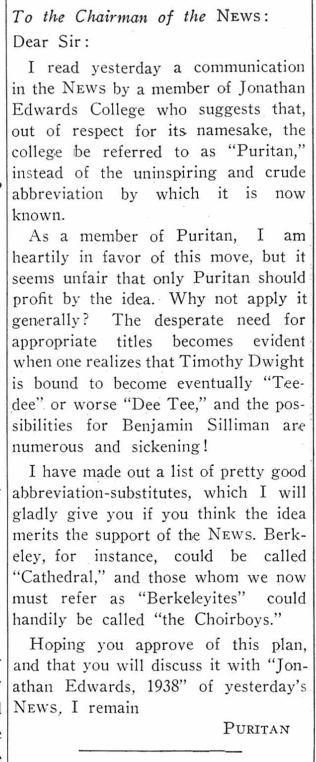
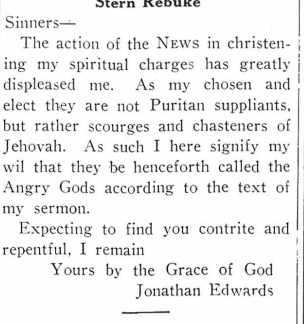
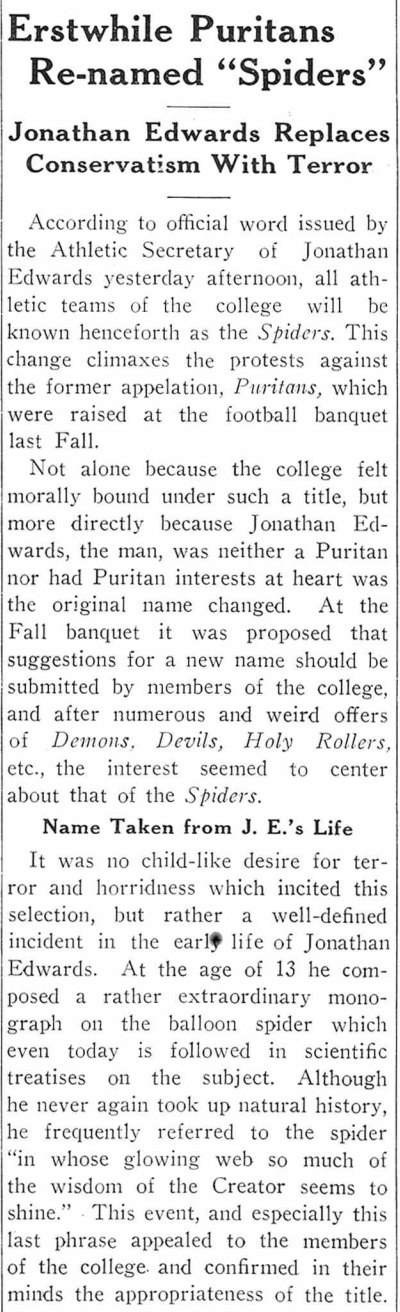
In a series of letters to the editor in 1935, JE students wrote about changing the JE team name. Although “Angry Gods” is mentioned, it’s a wonder no one suggested “Sinners,” the unofficial, irreverent nickname JE students sometimes go by today. By January 1936, JE’s team name had officially switched from “Puritan” to “Spider,” with “Spider” still serving as the moniker for JE students today. The move away from “Puritan” also increased JE’s historical accuracy, as Jonathan Edwards’s time as a congregationalist Great Awakening minister followed the height of Puritanism in the region by several decades.

Other Historical Details, Still Relevant in JE Today
Check out the story of how and when the printing press made its way into the JE basement, the mystery of the disappearing JE dinnerware, and the tale of a JE party so good it made the news (I’m told all these cultural markers and more remain alive and well today).
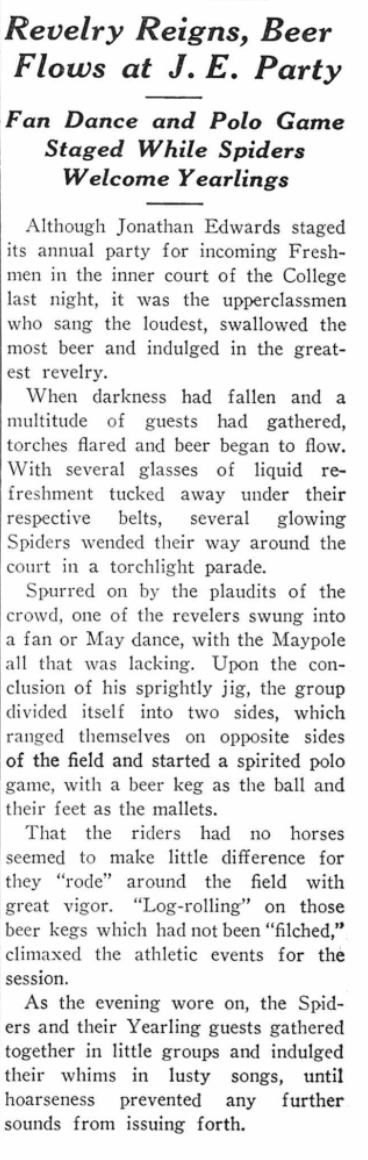
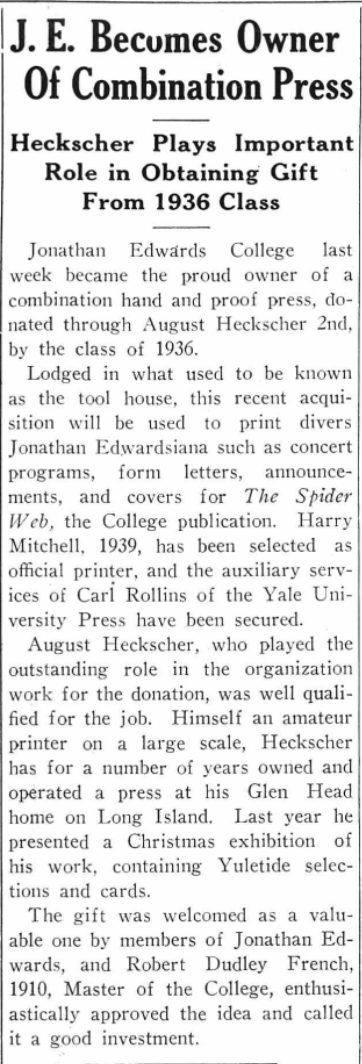
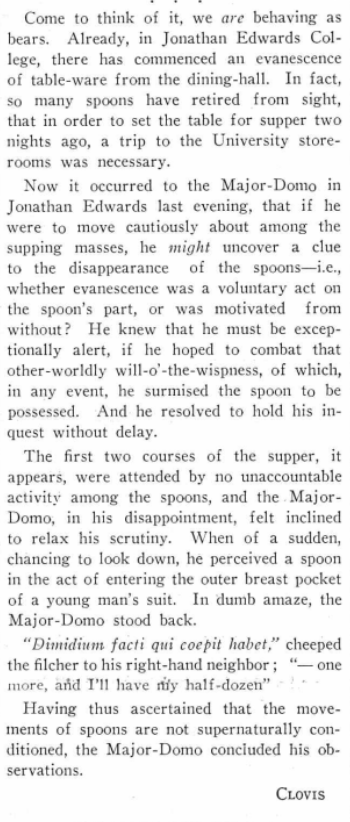
As all of these stories (and more!) demonstrate, the things about JE that we love today have a rich history that can be traced all the way back to the college’s earliest moments. Just think what legacy this generation of JE students will leave for the following generation to carry on!
Resources for other alums to continue this historical research:
- Yale Library’s online (and fully digitized!) record of YDN newspapers 1878–2021 (and growing!)
- Curated by Julier and graciously shared with the broader JE community, a Google Drive folder of the YDN articles featured here and a few extras!
- Former JE Dean Mark Ryan’s A Collegiate Way of Living
- The Spiders’ Way, a history of the college authored by Ryan and former Heads Gary Haller and Penny Laurans, featuring student reminiscences from the 1940s to 2020
Note: In the 1930s, Yale’s undergraduate student body was much less diverse than it is today and these articles reflect that context. In the late 1960s, Yale College significantly increased the admission of students of color and students from public schools. Women undergraduates were first admitted in 1969.
Student Spotlight: Elias Theodore JE ’27

Interview and transcription by Lydia Burleson JE ’21.
Each year, the JE Trust interviews a current student to learn more about life in JE and at Yale today. This fall, Lydia Burleson JE ’21 interviewed Elias Theodore JE ’27 about his time in JE, what community at Yale and in the residential college looks like for him, and what it’s been like to get more involved in New Haven after having grown up here since he was six. Elias’s commitment to community in all its forms led him to successfully run for local office in New Haven’s most recent Ward 1 alder election.
Name: Elias Theodore (he / him)
Class Year: JE ’27. Being a junior feels real.
Where have you lived in JE? All alums have lived pretty much in the same places in JE and Old Campus. Someone reading this might have had your room! I lived on Old Campus my freshman year in Farnam B32. I got super interested in the history of Farnam and actually wrote a paper about the way Yale transformed Old Campus, starting with the construction of Farnam in the late 19th century. Last year, I lived in JE C31, and this year I’m living in the octet which has the same entryway as the library.
What’s your major? Urban studies. I came into Yale knowing I wanted to do something in the humanities, but I wasn’t sure what. By sophomore year, I thought I was going to major in history. But then I started taking architecture classes. I took one intro class that completely changed the way I see space and buildings and lines. It made me much more appreciative of my surroundings. Urban studies feels like it’s in between history and architecture: it focuses on people and design and history.
What are you hoping to do with your major after you graduate? I’m really interested in municipal government city planning. So at some point, I think I’ll get a master’s in urban planning or urban policy. I’d really like to work on housing policy or zoning. The Alder stuff has been a jump into politics which I’ve really enjoyed so far, so maybe I’ll do something more political long-term. I really like working locally.
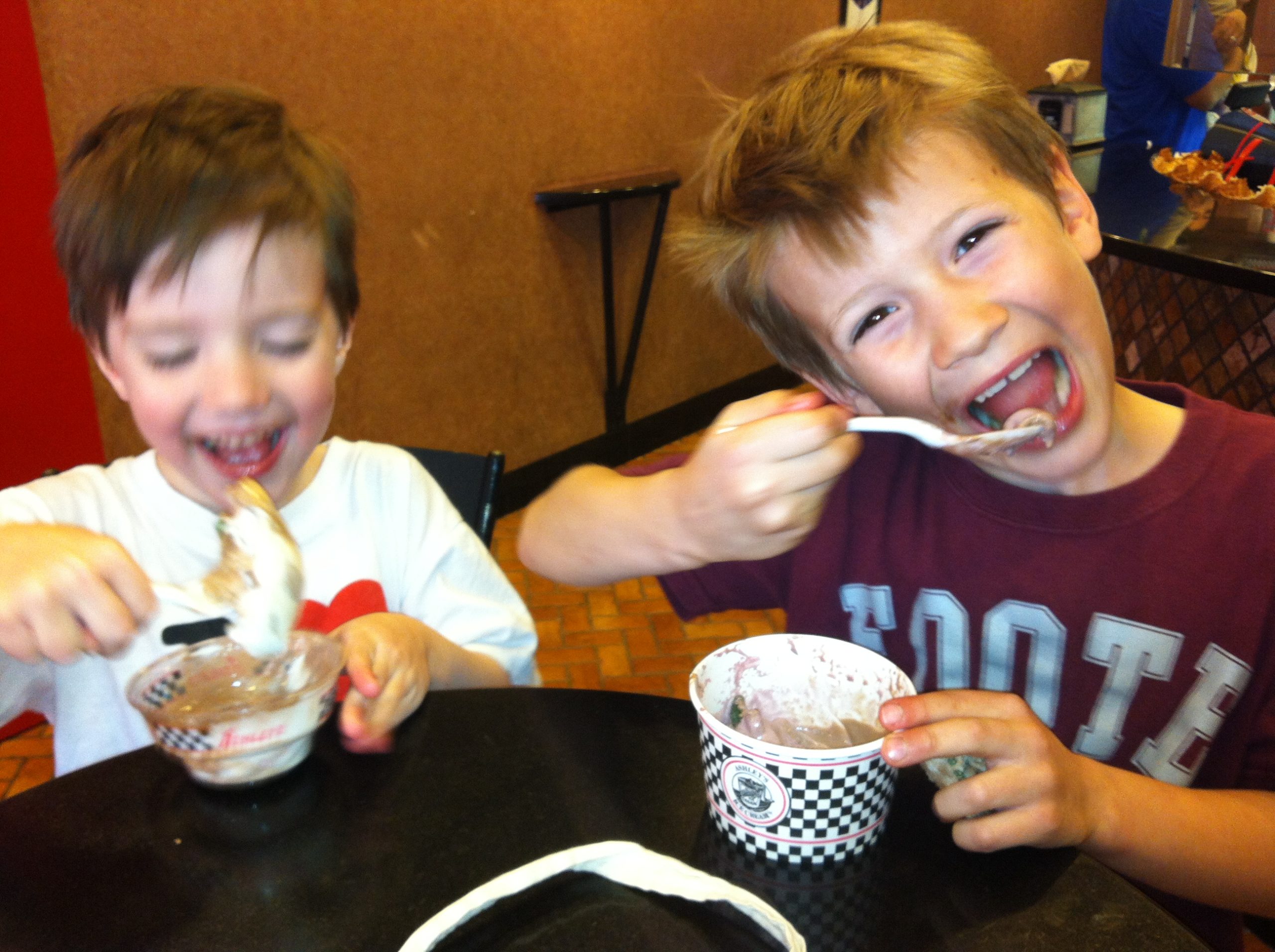

Elias (right) as a child eating ice cream at Ashley’s with his brother and playing baseball at the base of West Rock.
What made you decide to run for the alder race: Two big things. First of all, I love this place; I’m so happy to go to school here and feel so lucky that Yale is in a place like New Haven, where I’ve lived since I was six. It’s awesome as an urban studies major that we get to live in a place that has so much history and beauty yet so many challenges that demand our care and work. Second, I was doing a ton of my academic work on New Haven. I was writing a bunch of essays and journal pieces on the city and I asked myself, is this the best way to think about these issues? Should I be commenting from the library on how we can make more affordable housing, or can I do it more directly?
What does community look like to you? How has growing up in New Haven and doing your undergrad in the same place shaped your relation to place—from New Haven’s urban environment to JE’s residential college environment, and the interplay between the two? Growing up in New Haven, I think a value instilled in me was a love for, and a responsibility to, the place where you are. The idea that you will live the happiest life if you know your neighbors and make an effort to connect with them and show up to things in the community. For me, that looked like spending a ton of time in East Rock Park and playing a bunch of sports in high school and showing up to friends’ games. And at Yale, it has looked like getting incredibly involved with JE. I’m on the College Council. I work as a Head of College aide, which is the best job.
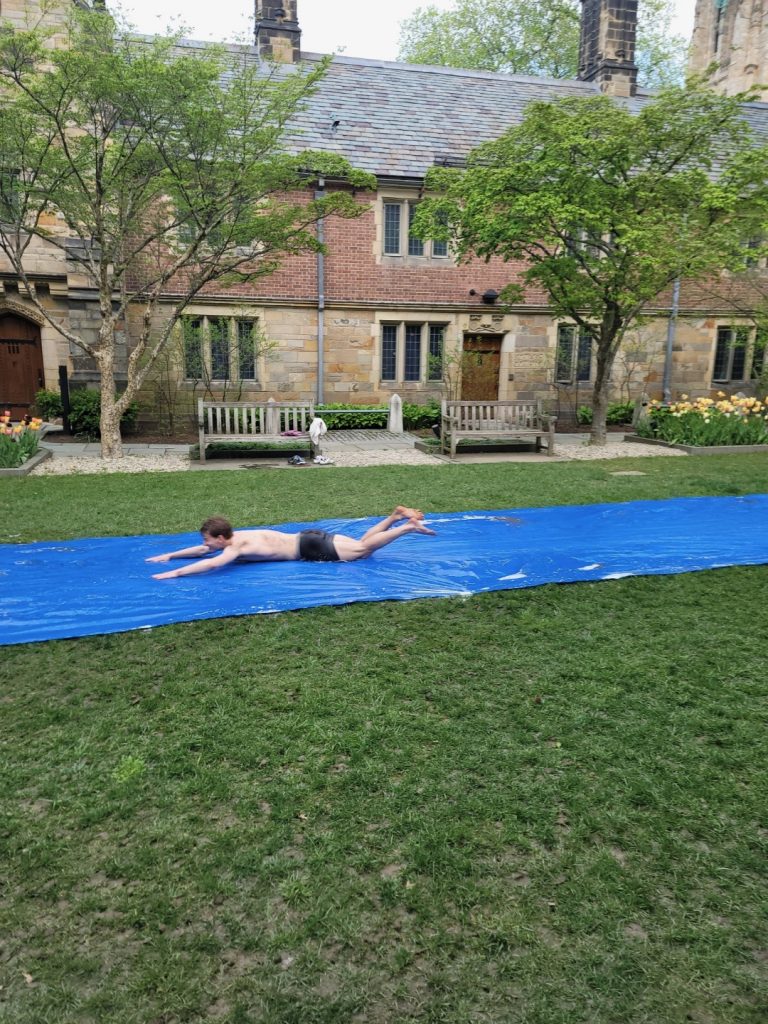
JE Community looks like a waterslide in JE’s courtyard.
My attitude coming into college was, I will have the most fun here if I completely embrace the college I was randomly assigned to. And I feel incredibly lucky that I got assigned to JE. I met people who were equally invested in JE and knew that going all-in on JE meant going all-in on Yale. Here’s just one example of community I’ve experienced in JE: when I showed up as a freshman, there was a senior who had this massive tarp, and he would bring it out to the courtyard and make it into a waterslide, and people could come and just get in their bathing suits and go on the waterslide. And the tarp was passed down to a first-year counselor last year, and now I have it, and hopefully we’ll set it up sometime next week for a waterslide. It’s things like that about my arrival in JE that made me think, oh my god, this place is awesome!
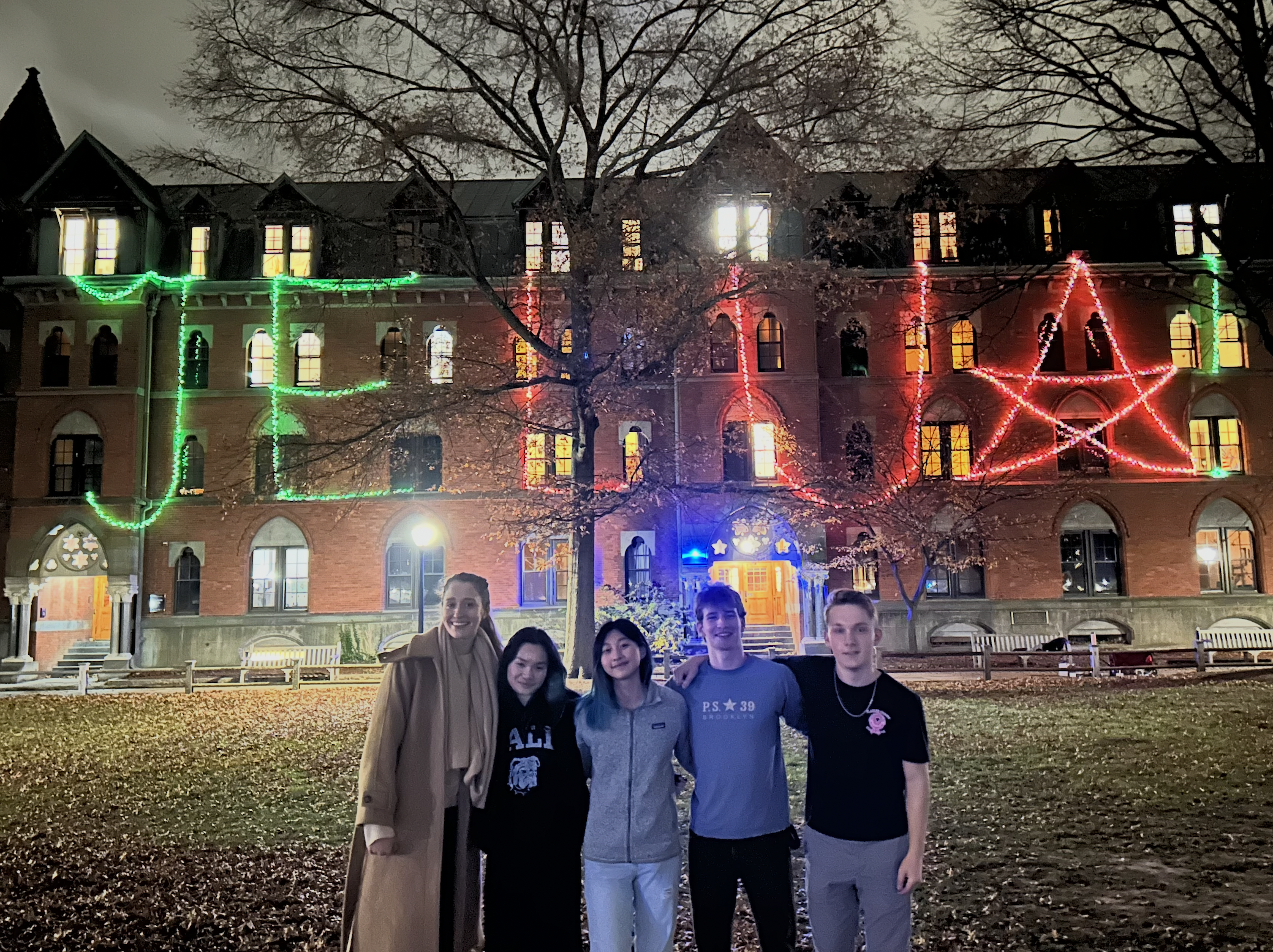
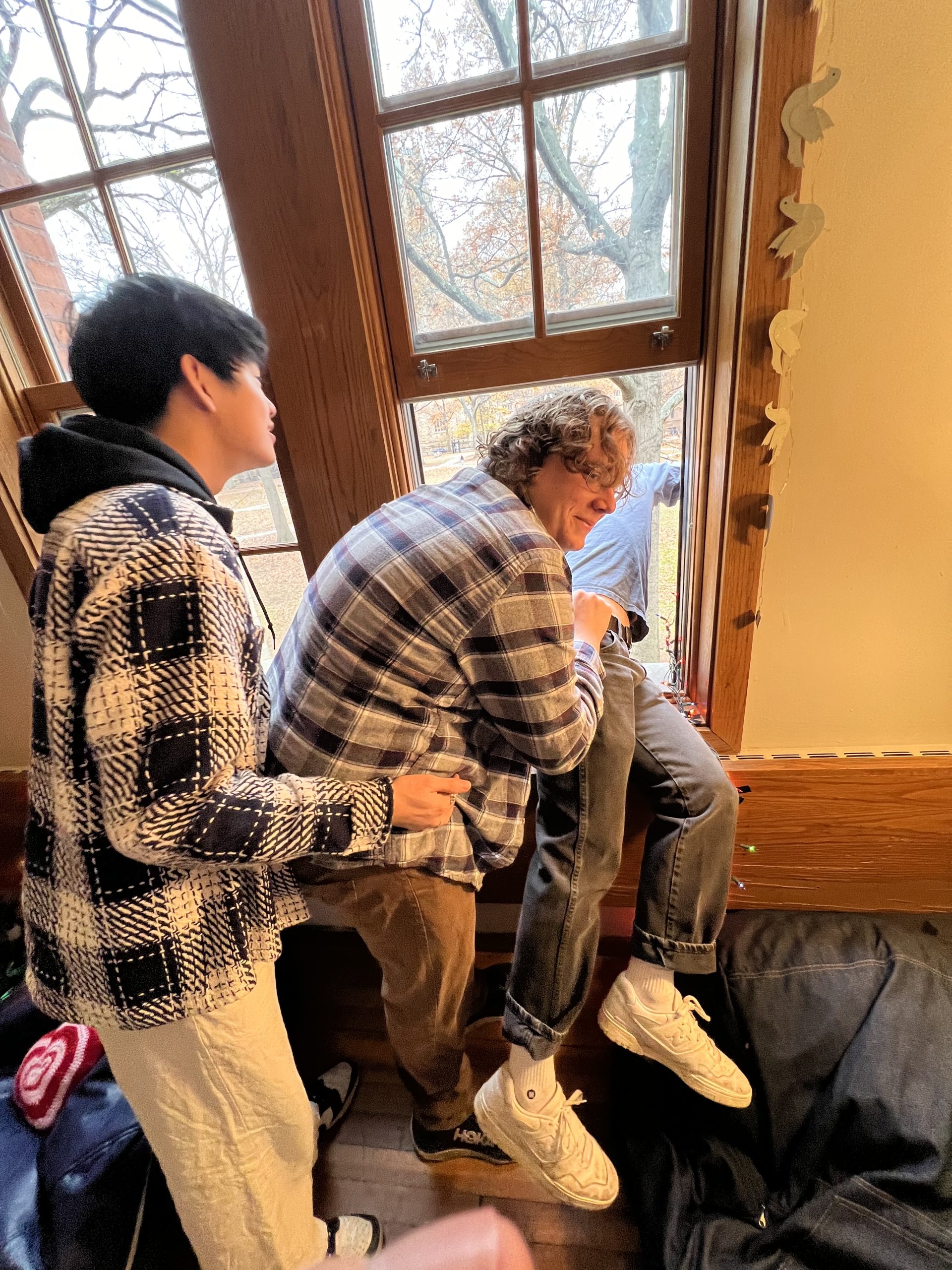
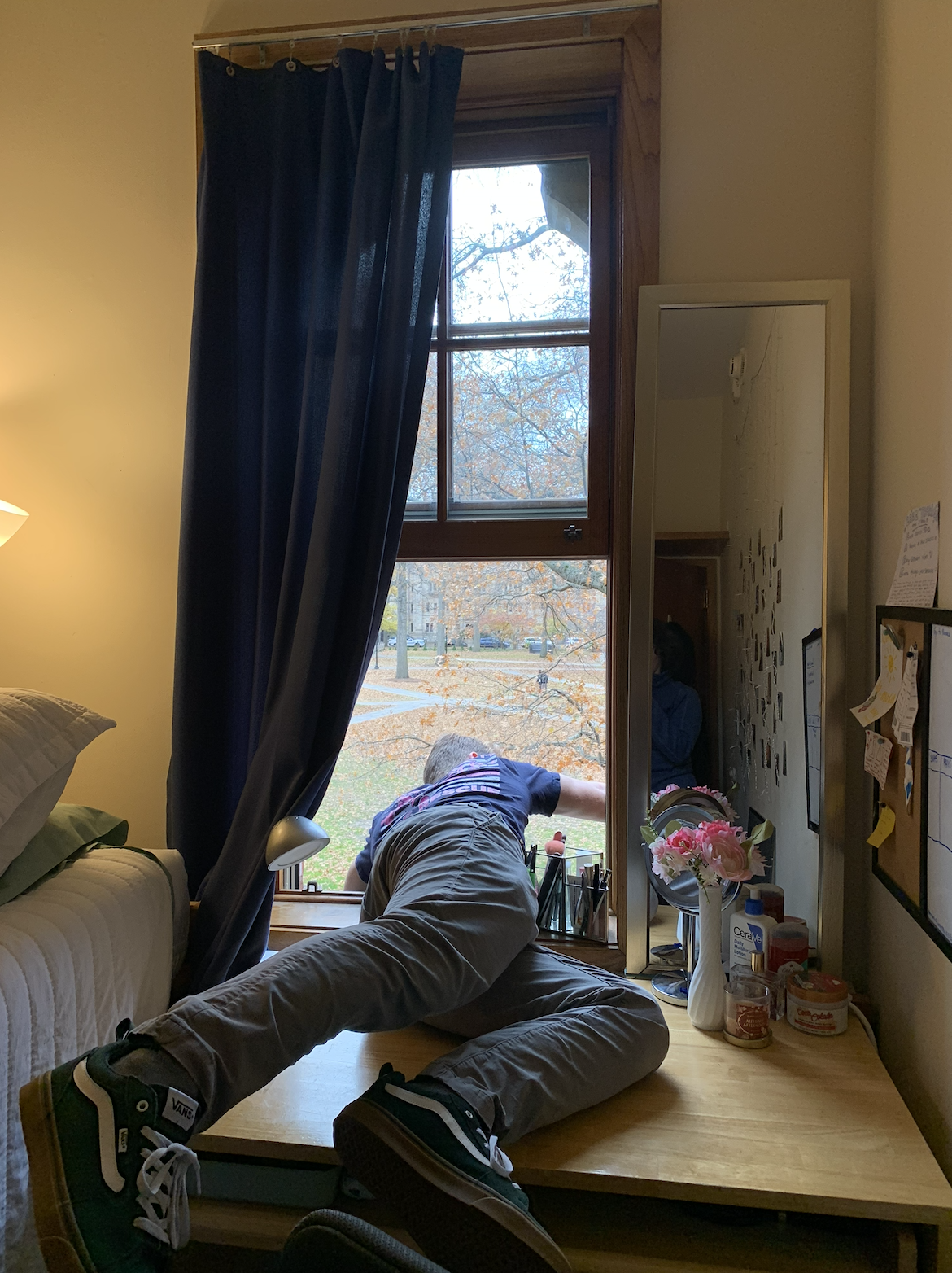
What’s your favorite JE tradition or memory? What stands out and why? The Christmas tree lights on Old Campus were really special. I got back early the Sunday after Thanksgiving break and spent six hours trying to figure out how to string the lights to spell “JE LUX,” and then my friends gradually returned from break and shared in the awe. It was amazing and gave me a real sense of JE Pride.
What are you looking forward to in your senior year in JE? I’m really excited for the Paskus-Mellon talks. I have a good sense of what a lot of people in my class are doing, but coming together and hearing everyone talk about their research projects will be really special.
Thank You!
Thank you for reading the JE Trust’s 2025 newsletter. This project seeks to foster connection among all JE alumni by reflecting on our varied and enriching experiences in the singular home for learning and life that is Jonathan Edwards College. Please see below for ways to connect with the Trust:
- The Trust is always glad to hear from the JE community. If you have feedback about the newsletter, including suggestions about how to improve it, please share your thoughts here.
- To learn more about the JE Trust, please take a look at our website here. If you would like to support the Trust’s work on behalf of the college, you can do so here.
- If you are interested in obtaining a copy of The Spiders’ Way, a beautifully written and illustrated history of the college, you can find information here.
- You can browse our December store, a collaboration with Campus Customs, here before it closes on December 7th! This year’s iteration includes vintage designs brought to the Trust’s most recent JE reunion event from Rosemary Filou JE ’85 and Bianca Calabresi JE ’85. Thank you to them for helping us continue celebrating JE with new vintage items!
- The College has long maintained a fund to help JE students pay for expenses—such as a warm winter coat, a new computer, or an emergency trip home—which they would not otherwise be able to afford. This fund was recently renamed in honor of Ayaska Fernando JE ’08, ’18 MS, who passed away in 2021. Although the fund is a JE College initiative, distributed to students at the discretion of the Head of College, the Trust is happy to help gather donations to support this effort. You can donate to the Ayaska Fernando Fund here. A lovely remembrance of Ayaska by Penny Laurans can be found here.
- We’d like this newsletter to reach all JE alumni readers; however, we are missing quite a few alumni emails. Please feel free to forward this newsletter to fellow JE alumni, friends, or family who you think may not be receiving it. New readers who would like to receive future Trust communications, including the annual newsletter, can subscribe directly to Trust communications here. We also encourage you to ensure your information is up-to-date in the Yale alumni directory, which we use to reach out to JE alumni.
This project was made possible through the JE Trust Committee on Alumni Relations team with content and contributions from Miko McGinty JE ’93, JE Trust Chair; Masu Haque Khan JE ’95, JE Trust Vice-Chair; Eve Rice JE ’73, Immediate Past Chair; former JE Dean Mark Ryan; and former JE Head of College Penny Laurans, whose fantastic alumni interviews are a treasured centerpiece of every newsletter we produce. Special thanks to Lydia Burleson JE ’21, JE Trust Alumni Engagement Coordinator, for her work planning, writing, and producing the newsletter. We would also like to thank our current student JE collaborators Jackson Castañeda JE ’27, the president of JECC, and Elias Theodore JE ’27; our alumni contributors Jennifer Julier JE ’77, Eric Sirakian JE ’15, and Barney Latimer JE ’93, our alumni editor; and JE Head of College Mark Saltzman, JE Dean Yaser Robles, and JE Senior Administrative Assistant Nicole Wade. Finally, we would like to dedicate this year’s newsletter to Catherine Skinner, JE Head of College of JE from 1977 to 1982, who passed away this year at the age of 94. You can read a longer tribute to HOC Skinner and the trail she blazed for women in the sciences in this Yale News article.
Happy holidays to all from the Jonathan Edwards Trust!
JE Lux!

Masu Haque Khan, JE ’95
Vice-Chair, the Jonathan Edwards Trust